
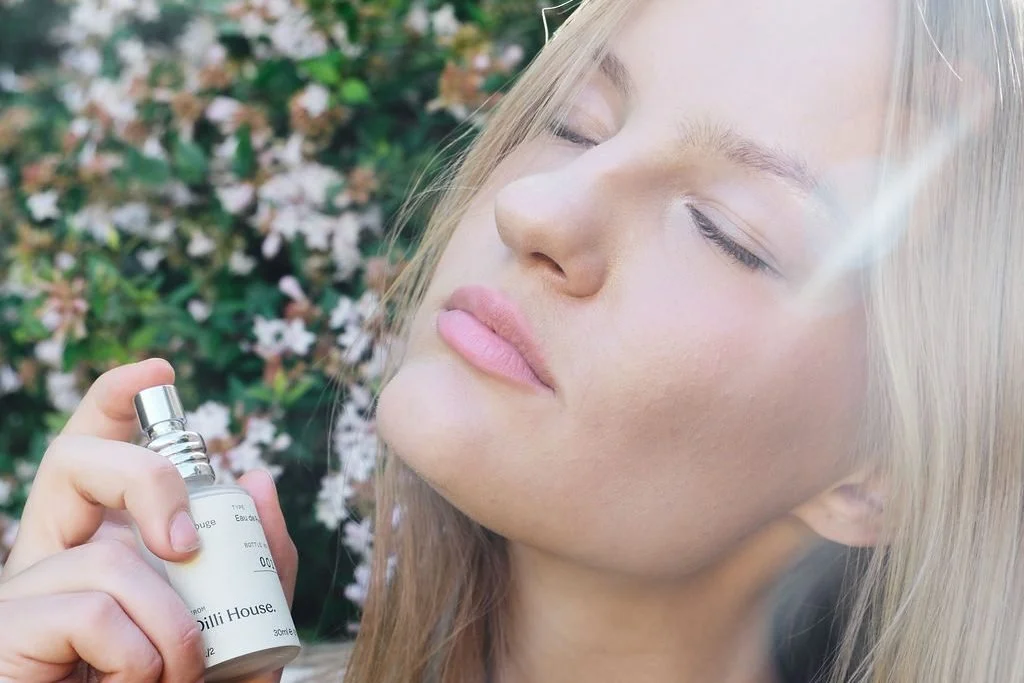
A spray on the neck and the skin goes warm for a moment. On a freshly shaved jaw it stings. On a cheek that flushes easily, it flushes. Most people put this down to the perfume. It is usually the alcohol, which makes up 70 to 90 per cent of a conventional perfume.
Sensitive skin is the most common reason people switch to alcohol-free perfume. Our own reason was different. The neurologist said no alcohol, after a cycling accident; there was no alcohol-free perfume Arpit wanted to wear, so he made one, Prem Rouge. But skin is what people ask us about, so this post is about what happens on the skin. What an alcohol-free perfume is, we covered earlier.
Why does perfume sting sensitive skin?
Alcohol on skin sets off the same nerve ending that chilli does. That nerve usually fires at about 42°C, hot enough to make you pull your hand away. Alcohol lowers its trigger to about 34°C, which is below the temperature of your skin. So the nerve reads a cool liquid as heat and says so, for a few seconds, until the alcohol has gone.
Everyone has these nerve endings. Skin biopsies from people with sensitive skin show more of them, and the more there are, the stronger the stinging those people report. Dermatologists make use of this. When a study needs people with sensitive skin, alcohol is one of the things dabbed on to find them.
Alcohol does a second thing on its way out. It takes a little of the skin’s own oil with it, and the surface takes up to a day to replace it. Pharmacists rely on this, because it helps a medicine through the skin. In a perfume it helps the fragrance through as well, and if your skin tends to react, deeper is the wrong direction.
Who reacts most to alcohol in perfume?
When the National Rosacea Society asked just over 1,000 people with rosacea which ingredient burns or stings, two in three named alcohol. Fewer than one in three named fragrance. Arpit has rosacea. The rose goes on his neck every morning.
In Japan, a pad soaked in alcohol held on the inside of the arm for seven minutes is a routine screening test. If the skin under it goes red, the person has a common gene variant. About a third of the country has it, and more than 500 million people across East Asia. For them, alcohol on skin shows within minutes.
Medicines that contain alcohol say so on the leaflet, with a warning that it may burn on damaged skin. A perfume comes with no leaflet.
Is alcohol-free perfume better for sensitive skin?
For the sting, yes. Take the alcohol out and put water in its place, and none of this happens. In a perfume without alcohol there is nothing to set the nerve off, nothing stripped, nothing carried through. A water-based perfume goes on cool and dries without the flash of heat, on a shaved jaw as much as anywhere.
Prem Rouge is a layerable fragrance duo, 100 per cent natural and alcohol-free, with water where the alcohol would be. The rose and the tuberose are each complete worn alone, and layered they become something new. It will not announce you from across a room. It stays close to the skin.
Can a natural perfume cause an allergy?
Yes. A sting and an allergy are different things. The sting is the alcohol. An allergy is an immune reaction to a fragrance material itself, and natural materials carry those just as synthetic ones do, so a natural, alcohol-free perfume carries them too. Linalool and geraniol are part of what makes a rose smell of rose, and they are in Prem Rouge, as they are in any perfume with real rose in it. Around two people in a hundred are allergic to one fragrance material or another. For them, the alcohol was never the problem.
So an alcohol-free perfume is not a promise that nothing in it can trouble you, and it is not a treatment. If your skin is sore, see a professional about the skin, not the perfume.
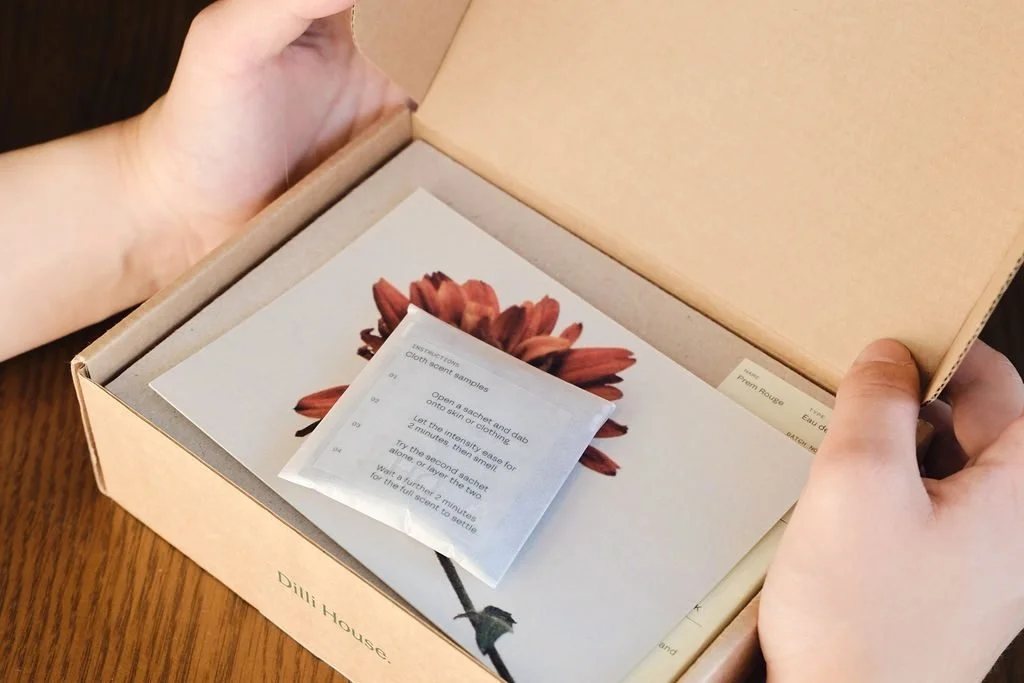
If you are not sure, try a sample on the inside of your arm and give it a day. Or wear it on clothing, which is how Arpit wears the tuberose.
Sources
Trevisani and others, Nature Neuroscience, 2002: alcohol and the heat-sensing nerve
Ehnis-Pérez and others, Journal of Cosmetic Dermatology: that nerve in sensitive skin
National Rosacea Society, survey of 1,023 patients
Brooks and others, PLoS Medicine, 2009: the alcohol patch test
European Medicines Agency, ethanol as an excipient, 2019
Diegen and others, British Journal of Dermatology, 2015: fragrance allergy in Europe